Post 6 – Design Beats Disposition: The Engine in Team Growth
Post #6 in New series: How Leaders Actually Get Better. This 12-post sprint is about building adaptive capacity: uncomfortable challenges, quick debriefs, real feedback, and psychological safety so stretch ≠ stress. Each post = one move you can use each week. Ready for learning that sticks? Let’s go!
Post 6 – Design Beats Disposition: The Engine of Team Growth
Personality tilts the table; it doesn’t set it.
We often look for traits like emotional stability and ambition when seeking employees who can handle change and complexity. And robust, cumulative research confirms these personality factors relate to adaptive performance.
But here’s the critical insight for managers and team leads: Disposition does not drive sustained, team-wide growth; Work Design does.
If you want an entire team to actually learn, improve, and handle increasing complexity, you can’t just rely on the “naturally adaptive” people. You must intentionally design the work environment.
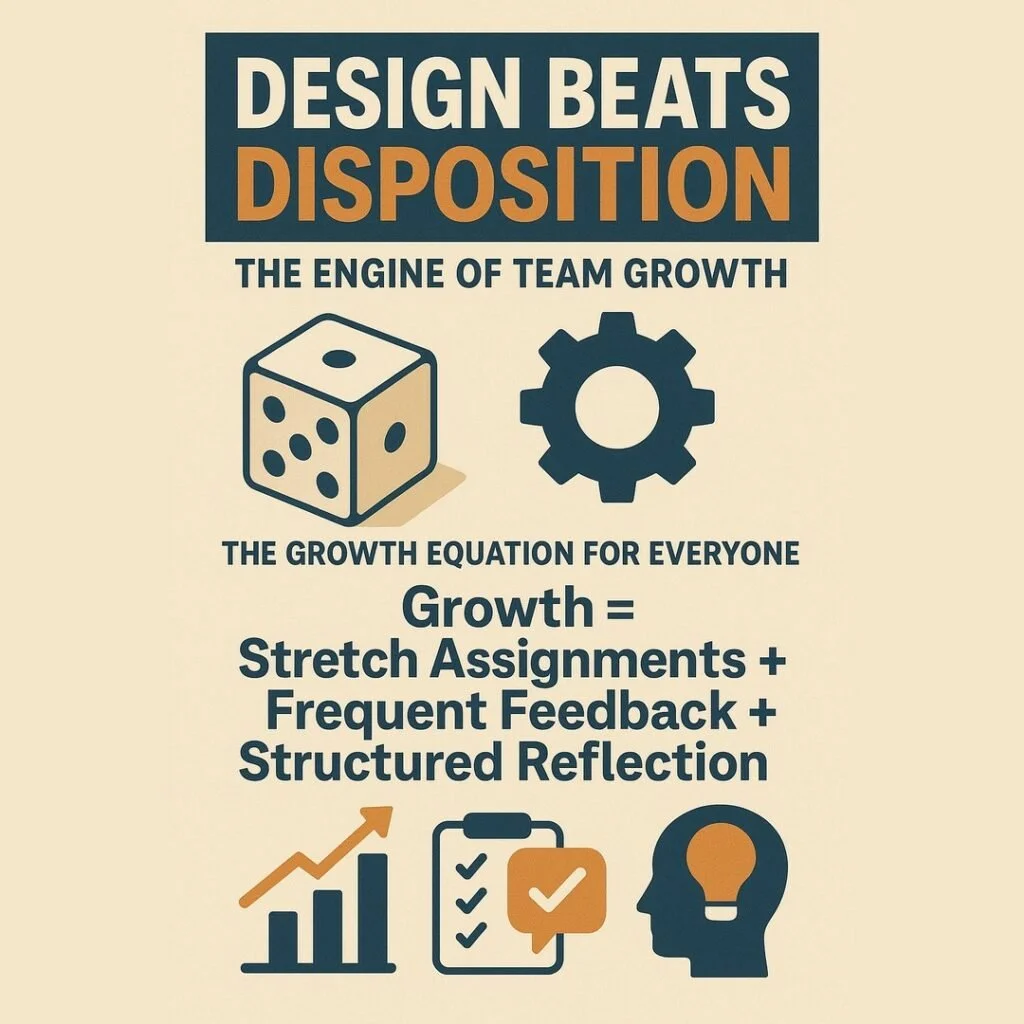
The Growth Equation for Everyone
The most effective workplaces leverage three non-negotiables:
Growth = Stretch Assignments + Frequent Feedback + Structured Reflection
Practical Action: Stop Relying on Luck, Start Scaffolding
Stop relying solely on innate traits. Instead, focus your managerial energy on creating extra scaffolds around high-novelty tasks.
When assigning a complex project or introducing a new technology (a high-novelty task), pair it with intentional support:
Coaching: Dedicated 1:1 sessions for problem-solving and navigating uncertainty.
Interim Demos/Milestones: Small, low-stakes checkpoints for early course correction and feedback.
Fast Feedback Loops: Immediate, constructive critiques delivered within 24 hours of a submission or attempt.
This strategy ensures capability rises across the entire team, democratizing adaptive performance instead of reserving it for the select few. It shifts the focus from who you hire to how you manage and develop.
What are your favorite “scaffolding” techniques for making sure everyone on your team grows, not just the naturally adaptive? Share your ideas below! 👇