Becoming the Kind of Leader Your Culture Needs
Becoming the Kind of Leader Your Culture Needs
Becoming the Kind of Leader Your Culture Needs ((Post #7, Final in Series: The Results You’re Getting - What Your Culture Reveals About Your Leadership)
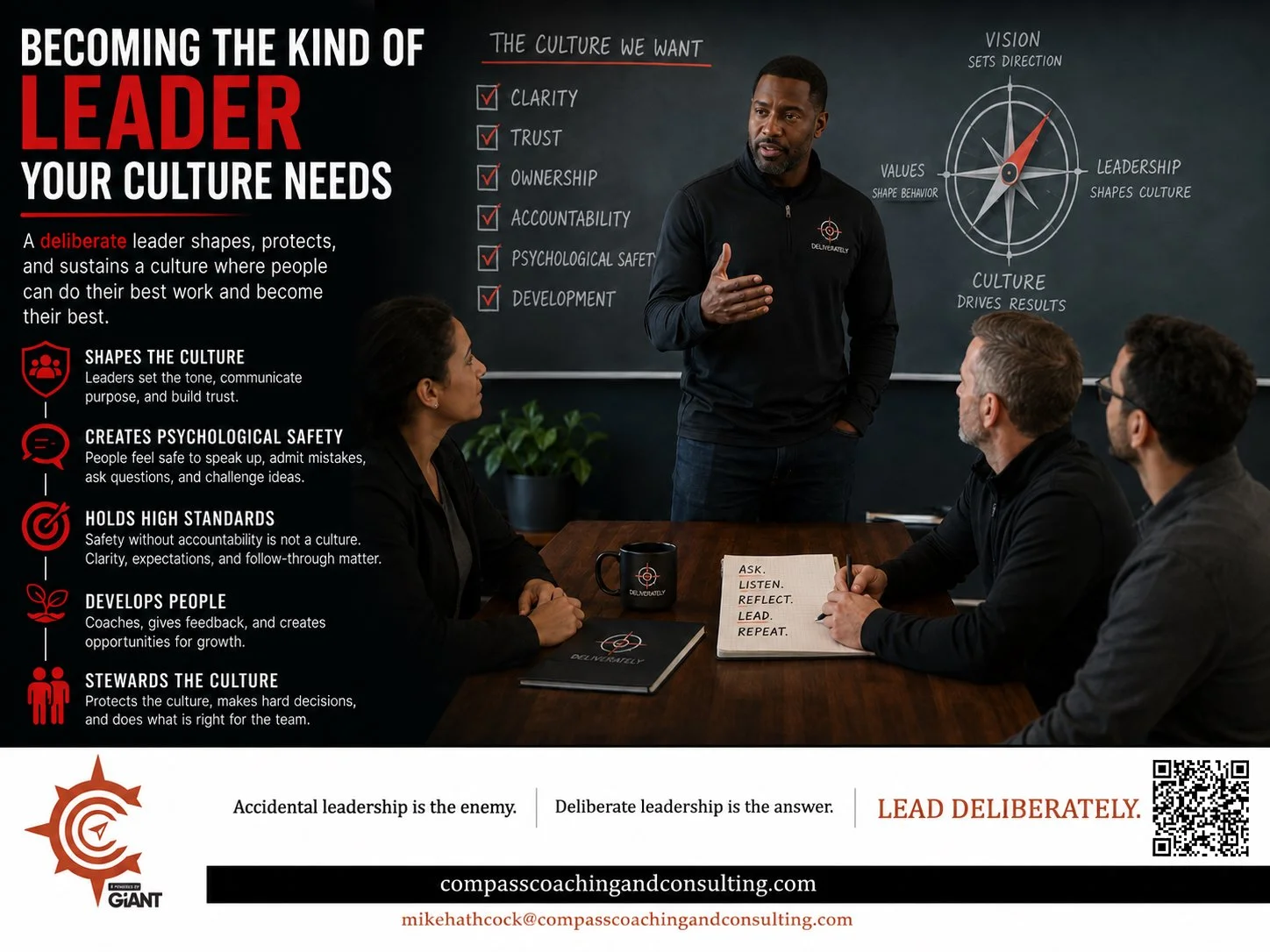
Effective leadership is not about controlling every outcome. It is about becoming the kind of leader who shapes, protects, and sustains a healthier, more effective culture.
The most effective leaders are not simply more forceful, charismatic, or demanding.
They are more deliberate.
They understand that culture is always forming. They pay attention to what people experience, study the patterns developing around them, and have the courage to ask what the culture reveals about their leadership.
They care about performance, but they also recognize that performance does not happen in isolation. It is shaped by the culture surrounding it—by clarity, trust, ownership, accountability, psychological safety, and development.
Research on transformational and transactional leadership suggests that effective leadership requires both inspiration and accountability. Leaders must communicate purpose, build trust, support their people, clarify expectations, and consistently follow through.
Research by Amy Edmondson (organizational-behavior scholar) on psychological safety indicates that teams are more capable of learning and improving when people feel safe enough to speak honestly, admit mistakes, ask questions, and challenge assumptions.
But psychological safety does not mean the absence of standards.
Healthy cultures require both safety and accountability. People need to know they can tell the truth without fear, but they also need to understand that the culture has clear expectations. They should feel safe enough to speak up and responsible enough to follow through.
A deliberate leader does not simply ask, “How do I get people to do more?”
A deliberate leader asks deeper questions:
What is our culture revealing right now?
What have people learned to expect from my leadership?
Where have I been clear, and where have I been vague?
What have I addressed, and what have I avoided?
What behaviors have I rewarded, even unintentionally?
What have I tolerated that now feels normal?
Who am I allowing to influence the culture in ways that contradict what we say we value?
What does my response under pressure teach the team?
What kind of culture does this team need, and what kind of leader must I become to help shape it?
This kind of leadership can be developed. It requires self-awareness, practice, feedback, courage, and consistency.
It also requires stewardship.
Leaders are stewards of culture. They are responsible not only for casting a compelling vision but also for protecting the environment in which that vision can become a reality.
That protection includes coaching people toward the culture rather than merely correcting them when they fall short. It includes giving honest feedback, clarifying expectations, and giving people meaningful opportunities to grow.
It also means being willing to make difficult decisions.
When someone repeatedly refuses to live according to the culture the leader is responsible for shaping, the leader may eventually have to decide that the person can no longer remain on the team. That decision should never be careless or impulsive, but avoiding it can communicate that the stated values of the organization are optional.
Leaders do not control everything that happens within an organization. They cannot control every attitude, behavior, decision, or outcome.
But leaders remain the primary culture-shaping force.
Their words shape culture. Their decisions shape culture. Their reactions under pressure shape culture. What they reward, confront, ignore, and tolerate all teach people what truly matters.
The question is not whether your leadership is influencing the culture.
The question is whether your leadership is helping create the culture and results your organization actually needs.
What kind of leader do you need to become for your culture to become healthier, clearer, and more effective?
Compass Coaching and Consulting helps leaders grow in self-awareness, clarity, consistency, and courage so they can lead more deliberately and shape healthier, higher-performing cultures.