From Climber to Guide: A Seven-Part Leadership Series
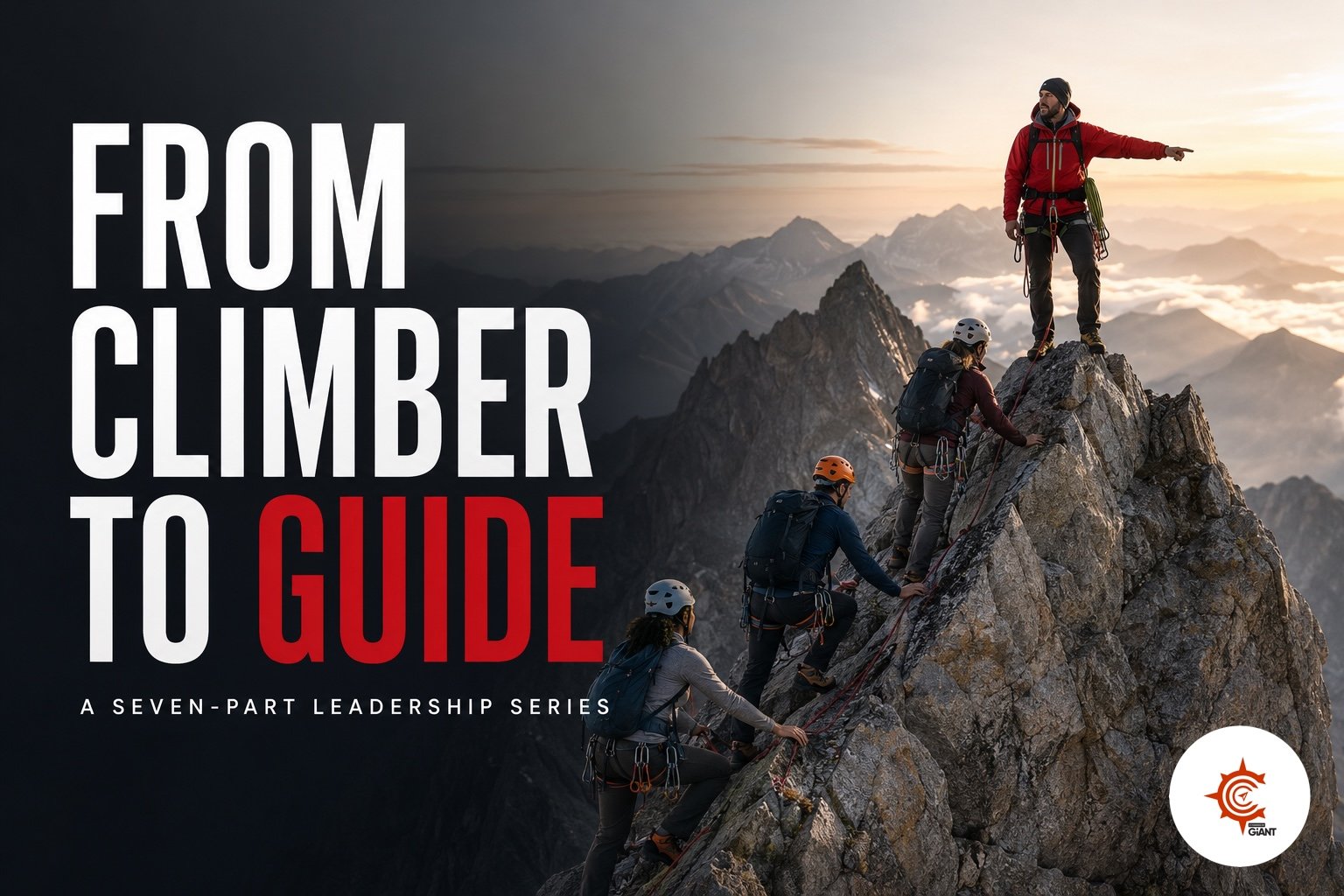
From Climber to Guide: A Seven-Part Leadership Series
Most leaders are promoted because they know how to perform.
They solve problems, deliver results, overcome obstacles, and take responsibility when the path becomes difficult. In the language of this series, they have learned how to climb—and climb well.
But leadership introduces a different challenge.
The strongest climber does not automatically become the strongest guide. Climbing requires personal competence. Guiding requires the ability to help other people develop competence, confidence, discernment, and ownership.
That transition can be surprisingly difficult.
As a performer, your value may have come from knowing the answer, completing the work, or stepping in to save the day. As a leader, your value increasingly comes from creating clarity, developing people, transferring responsibility, and building a team that can succeed without depending on you for every decision.
You are no longer responsible only for reaching the summit. You are responsible for helping others become capable climbers—and, eventually, guides themselves.
That is the journey we will explore in this seven-part series.
Who Should Read This Series?
This series is for:
High performers who have recently moved into leadership
Experienced leaders who feel overworked, overneeded, or trapped as the team’s primary problem-solver
Managers who want to delegate without abandoning their people
Leaders struggling to balance encouragement with accountability
Coaches, mentors, and executives responsible for developing others
Anyone who wants to build capable leaders—not merely loyal followers
You do not need to know anything about mountaineering to follow the series. Think of the mountain as the challenge in front of your team. The climb is the work of learning, growing, and delivering results. The guide is the deliberate leader who prepares the route, provides support, names the risks, maintains the standard, and helps others make the climb themselves.
Each post will give you practical “grips”—clear explanations, workplace examples, reflection questions, and actions you can apply immediately.
The Seven-Part Journey
The series begins with the next post:
Why Great Climbers Do Not Automatically Become Great Guides
Why excellent performance can earn someone a leadership opportunity without preparing them for the identity and responsibilities of leadership.
The Leadership Identity Crisis: When Being the Expert Is No Longer the Job
Why releasing the expert identity can feel like a loss—and how to convert personal expertise into greater capacity throughout the team.
Stop Rescuing Your Team: Support the Climber Without Carrying the Climber
How well-intentioned rescuing creates dependency, and how better questions can return responsibility without withdrawing support.
Three Deliberate Shifts From Performer to Multiplying Leader
The essential moves from producing results to multiplying capacity, from solving problems to developing problem-solvers, and from being needed to building independence.
High Support and High Challenge: The Leadership Combination That Liberates People
Why people grow best when leaders combine meaningful support with honest expectations, real responsibility, and appropriate challenge.
Call People Up, Not Out: How to Protect Dignity and Keep the Standard
How to address performance gaps directly without attacking someone’s identity, diminishing their potential, or lowering the standard.
Build Leaders Who Can Climb Without You
How to create a repeatable path from observation and supported practice to ownership, independence, and leadership multiplication.
The Invitation
This series is not about becoming less capable, lowering expectations, or making yourself irrelevant.
It is about using your capability differently.
It is about moving from proving what you can do to expanding what others can do. From holding all the answers to teaching people how to think. From repeatedly saving the day to building a team that can face difficult days with confidence and wisdom.
The question is no longer simply:
How high can I climb?
The better leadership question is:
Who is becoming a stronger climber—and a future guide—because I chose to lead them deliberately?
If you are ready to make that shift, join me for the next seven posts.
The climb begins with Post 1: Why Great Climbers Do Not Automatically Become Great Guides.
Accidental leadership is the enemy. Deliberate leadership is the answer.
Lead deliberately—and help others climb.