Why Great Climbers Do Not Automatically Become Great Guides
Great Performers, Great Leaders
POST 1 OF 7
Why Great Climbers Do Not Automatically Become Great Guides
Reaching the summit proves that you can climb. Leadership is revealed by whether other people become stronger, wiser, and more capable because you guided them.
The Mountaineering Metaphor—With the Handholds Included
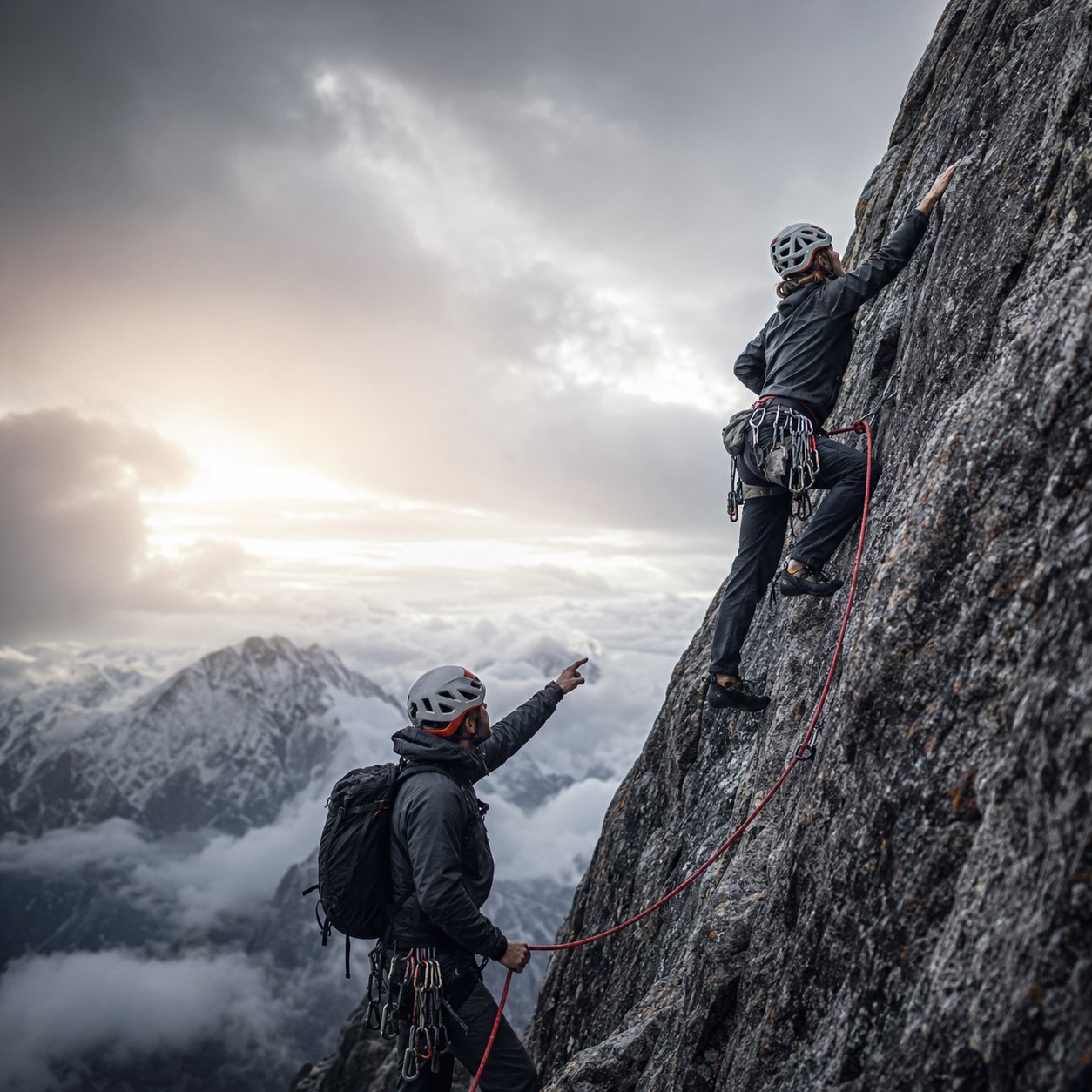
Climber - The individual performer doing the work
Guide / Sherpa mindset - The healthy, multiplying leader who equips others
Summit - The result or mission
Route - The process, skills, discernment, and decisions required
Rope - Trust, support, and appropriate safeguards
Before we use the image, let’s make it clear. A climber is responsible for reaching the summit. A mountain guide/Sherpa studies the route, watches the weather, prepares equipment, manages risk, and helps other people climb safely and skillfully, while developing the technical ability, wisdom, and capacity for these people to become skillful climbers—and eventually another guide. The summit represents the result. The route represents the work. The changing weather and altitude represent pressure and uncertainty. The rope represents trust and appropriate support.
One important note: Sherpa is the name of an ethnic community indigenous to the Himalayan region, with a rich culture and extraordinary mountaineering tradition. In leadership conversations, we often use the word as shorthand for an experienced mountain guide. Here, the metaphor is meant respectfully and specifically: a leader who knows the terrain, prepares others, shares hard-earned wisdom, and stays close without doing the climb for them.
A Title Changes Faster Than an Identity
Many people are promoted because they were excellent performers. They knew the work, solved difficult problems, produced results, and could be trusted. Then, often overnight, the organization promoted them, handing them a fundamentally different job.
Yesterday, success meant, “I climb well.” Today, success means, “I help other people become capable climbers—and eventually guides themselves.” The title changes immediately. The mindset and skill set rarely do.
That is accidental leadership: rewarding someone for what they accomplished without preparing them for who they must now become. Deliberate leadership prepares the person for the identity shift and development of necessary skills.
The Performer’s Paradox
Research involving nearly 40,000 employees across 131 firms found that strong individual performers were more likely to be promoted, but individual performance success did not reliably predict leadership effectiveness. In many cases, the strongest performers became less-effective leaders.
The lesson is not that high performers should not lead. It is that climbing ability and guiding ability are different capabilities. Technical excellence is valuable evidence. It is not sufficient evidence of leadership readiness.
The New Test of Value
The promoted person’s value is no longer measured only by personal output. It is measured by what becomes possible through other people.
Are you developing climbers who have more clarity after talking with you? Can they make sound decisions when you are absent? Are they growing in discernment, confidence, and responsibility? Can they guide someone else?
The real test of leadership is not simply, “Did we reach the summit?” It is also, “Who became a stronger climber because we made the journey together?”
Reflection Questions
Were you prepared to lead—or simply promoted for performing?
Where are you still measuring your value primarily by personal output?
Who is becoming more capable because you lead them?
Continue the Series
Next: The identity shift that makes giving responsibility away feel surprisingly personal.