Culture Is What People Repeatedly Experience
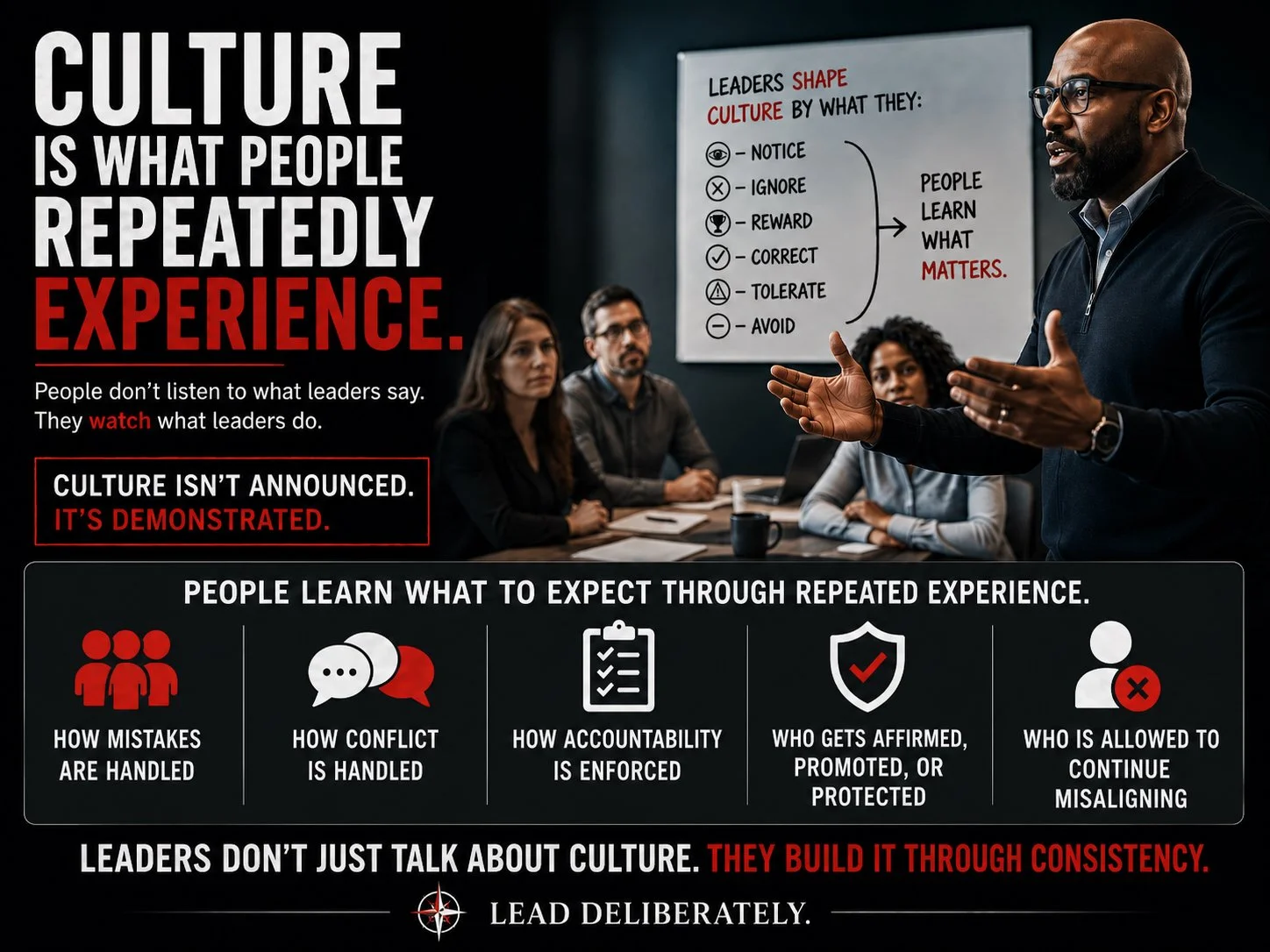
Culture Is What People Repeatedly Experience (Post #4 in New Series: The Results You’re Getting - What Your Culture Reveals About Your Leadership)
Most organizations have language about values.
They may talk about trust, accountability, excellence, collaboration, innovation, service, or integrity.
Those words matter. Values give language to what an organization says is important. But culture is not built by words alone.
Culture is built through repeated experience.
People learn what matters by watching what actually happens. They learn during the meeting what is safe and what is not. They learn from the meeting after a mistake. They learn from the conversation after a missed deadline. They learn from how conflict is handled. They learn from how leaders respond when someone tells the truth.
Albert Bandura’s social learning theory helps explain why this matters. Bandura showed that people learn not only through direct instruction, but also through observation and modeling. In organizations, people learn culture by watching leaders. They observe what leaders notice, ignore, reward, correct, tolerate, and avoid.
REPEAT: People learn culture by watching leaders. They observe what leaders notice, ignore, reward, correct, tolerate, and avoid.
A leader may say they value trust, but if people do not feel safe being honest, the culture reveals something else.
A leader may say they value accountability, but if missed expectations are rarely addressed, the culture reveals something else.
A leader may say they value collaboration, but if people protect their own interests and avoid direct conversations, the culture reveals something else.
A leader may say they value growth, but if mistakes are punished or hidden, the culture reveals something else.
Culture is not what leaders hope people experience. Culture is what people have learned to expect.
That expectation is formed through repeated leadership behavior. It is also formed through who gets affirmed, who gets promoted, who gets protected, and who is allowed to continue violating the culture without meaningful correction.
Leaders shape culture not only by what they personally do, but by what they allow others to do.
If someone repeatedly undermines the culture, avoids accountability, damages trust, or refuses to grow, the leader’s response teaches the rest of the team what the culture actually is.
This is one of the harder parts of leadership. It is also one of the most important.
A leader can be compassionate and still be clear.
A leader can be patient and still have standards.
A leader can care deeply about a person and still decide that the person cannot remain on the team if they refuse to align with the culture the organization needs.
That kind of decision should never be careless or impulsive. People deserve clarity, coaching, support, honest feedback, and a real opportunity to grow. But when someone consistently refuses to align with the culture, the leader has to consider the impact on everyone else.
Because culture is not only shaped by what is said. It is shaped by what is allowed to continue.
The question worth asking is this:
What have people learned to expect from your leadership?
Have they learned that honesty is safe?
Have they learned that accountability matters?
Have they learned that trust will be protected?
Have they learned that conflict can be handled directly and respectfully?
Have they learned that values are more than words?
Deliberate leadership means becoming more intentional about the repeated experiences that form your culture.
Because over time, what people repeatedly experience becomes what they believe.
And what they believe becomes how they behave.